
Our Training
AVIONICS TECHNICIAN
Program (ATP)
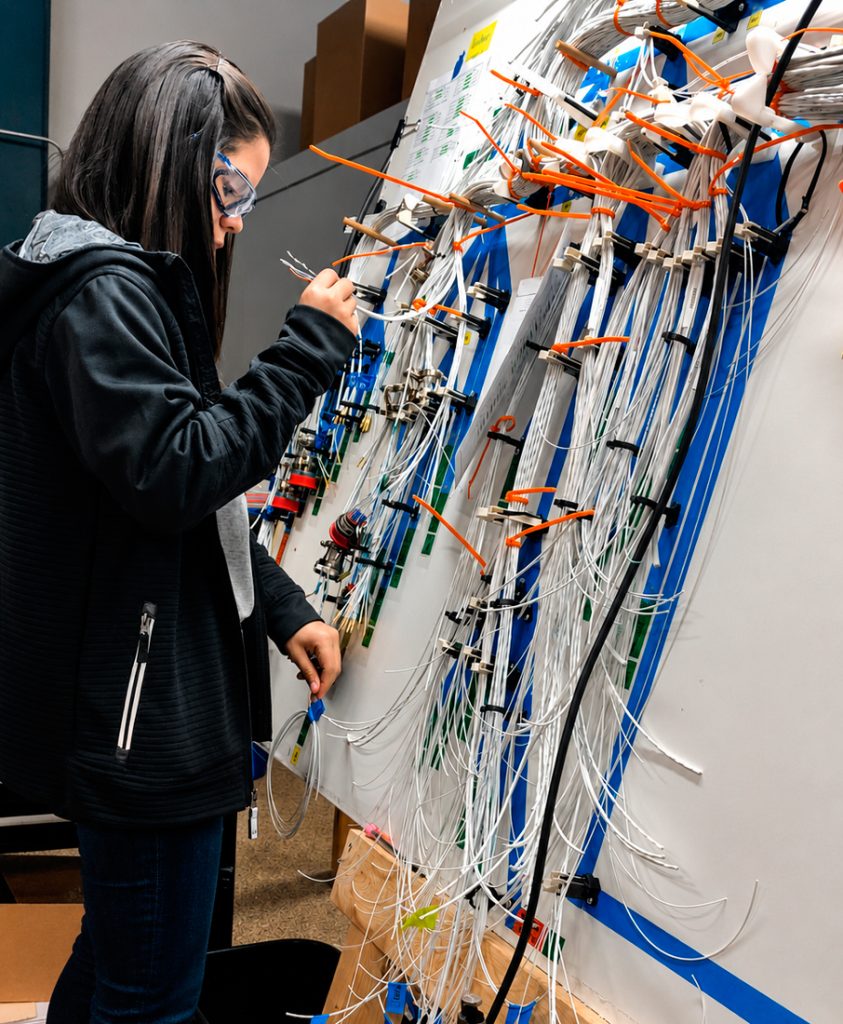
The Avionics Technicians Association (ATA) has partnered with the University of Central Florida’s Division of Continuing Education in offering a three-month, 72-hour, training program to prepare individuals for certification to work in the aviation industry. The Avionics Technician Program (ATP) focuses on teaching the proper techniques for installation of electronic equipment for navigation and communication systems of an aircraft.
The Program will cover topics such as: Electronic navigation instruments and communication, technical education, aviation safety, quality control, human factor, and the newest aviation technology known as NextGen.
Sign up for
Our mailing list
Program
Schedule

1
Morning class schedules
Monday/Wednesday (9am – 12pm):
3 hour session; six (6) hours per week for 12 weeks.
Tuesday/Thursday (9am – 12pm):
3 hour session; six (6) hours per week for 12 weeks.
2
Evening class schedules
3 hour session; six (6) hours per week for 12 weeks
Tueday/Thursday (6pm – 9pm):
3 hour session; six (6) hours per week for 12 weeks
3
Saturday class schedule
6 hour session; (once) every Saturday for 12 weeks
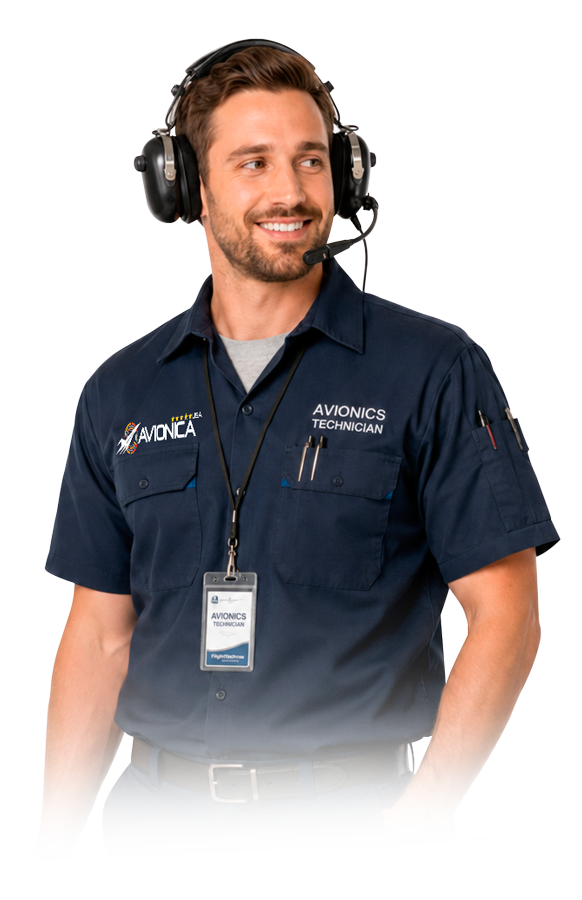
By January 1, 2020 all aircraft must be equipped with the NextGen ADS-B technology to be compliant with Federal Aviation Administration (FAA) regulations. This training program is designed to meet the needs of the aviation industry while developing local talent for jobs. According to the Bureau of Labor Statistics avionics technicians earn a median salary of $58,540 up to $87,570.
Training includes reviews and tests for two of the most important licenses of the Federal Communications Commission (FCC) and one-year membership in the Avionics Technician Association.
AVIONICS TECHNICIAN PROGRAM
Introduces SMT
As our mission to keep our Avionics Technicians up to date on the latest in the field we developed our new UCF certified Surface Mount Technology (SMT) course which prepares you to work with and troubleshoot the electronics equipment down to component level located in the aircraft.
Surface Mount Technology is a method for producing electronic circuits in which the components are mounted or placed directly onto the surface of printed circuit boards (PCBs). An electronic device so made is called a surface-mount device (SMD).
The vast majority of commercial electronics are all about complex circuitry fitting in small spaces. To do this, components need to be directly mounted onto the circuit board rather than wired. This is essentially what surface mount technology is.
The Surface Mount Technology course will consist of 4 Fridays from 7 PM to 9 PM at a cost of $1,500. The SMT program is also University of Central Florida Continuing certified.
Week 1
- Introduction Instructor & Students
- Expectations of the course and classroom rules & safety
- Explanation of student package
- Types of airplanes & categories (General Aviation, Corporate Airplanes, Commercial Aviation)
- Parts of the airplane ( Rudder, Flaps, Elevator, Etc.)
- Gyroscopic Instruments (Heading Indicator, Attitude Indicator, Turn Coordinator)
- Vacuum System
- Pitot Static System (Airspeed Indicator, Vertical Sped, Altimeter)
- ADS-B (Automatic Dependent Surveillance-Broadcast)
- VOR (VHF Omnidirectional Range)
- DME (Distance Measuring Equipment)
- NDB & ADF (Non-directional Radio Beacon & Automatic Direction Finder)
- Radios, COMM, Audio Panel, Navigation
- Antennas
Week 2
- GPS (Global Positioning System)
- WAAS (Wide Area Augmentation System)
- Transponders (Mode A, Mode C, Mode S)
- ELT ( Emergency Locator Transmitter)
- ATC (Air Traffic Control)
- EFIS (Electronic Flight Instrument System)
- PFD (Primary Flight Display)
- MFD / ND (Multi-function Display / Navigation Display)
- TCAS (Traffic Collision and Avoidance System)
- Bus Bar (Aircraft Electrical System Components)
- Human Factors
- General Review
- Assessment
Week 3
- Pitot Static Test / System Diagram / System Error / Barfield 1811D Tester
- Terminals & Connectors
- D-Sub
- Molex
- Circular Connectors
- Connector Design & Usage
- Coax Cable
- BNC Connectors
- TNC Connectors
- Quadrax Connectors familiarization
- Basics of building High Speed Network Cable
- Fiber Optics Introduction
- Basics of building High Speed Network Cable
- Applying Fiber Optics in Aviation
Week 4
- Basic Electronics
- Ohm’s Law
- Series & Parallel Circuit
- Resistors Color Codes
- Alternating Current (AC)
- Direct Current (DC)
- Logic Gates (AND, OR, NOR, XOR)
- Diodes
- Capacitors
- Use of multimeter
- Use of Oscilloscope
- Use of function generator
- Use of power supply
Week 5
- Familiarization of Tools (Hand Tools / Crimp Tools)
- Use of Daniels AFM8, AF8 Crimp Tool
- Go-NO-Go Gauge
- Use of HX3 / HX4 Crimp Tool
- Schematic Symbols
- Soldering Techniques
- Wire Splice
- Soldering Jacks
- Wire Tying Knot
Week #7-12
- Inventory of Wire harness kits
- Schematic familiarization (GMA340 / GTR200 / GTX345)
- Assembly Connectors for GMA340 (Audio Panel)
- Assembly Connectors for GTR200 (Radio)
- Assembly Connectors for GTX345 (Transponder)
- Perform harness ring-out (continuity check)
- Install Harnesses to the Radio, Audio Panel, and Transponder
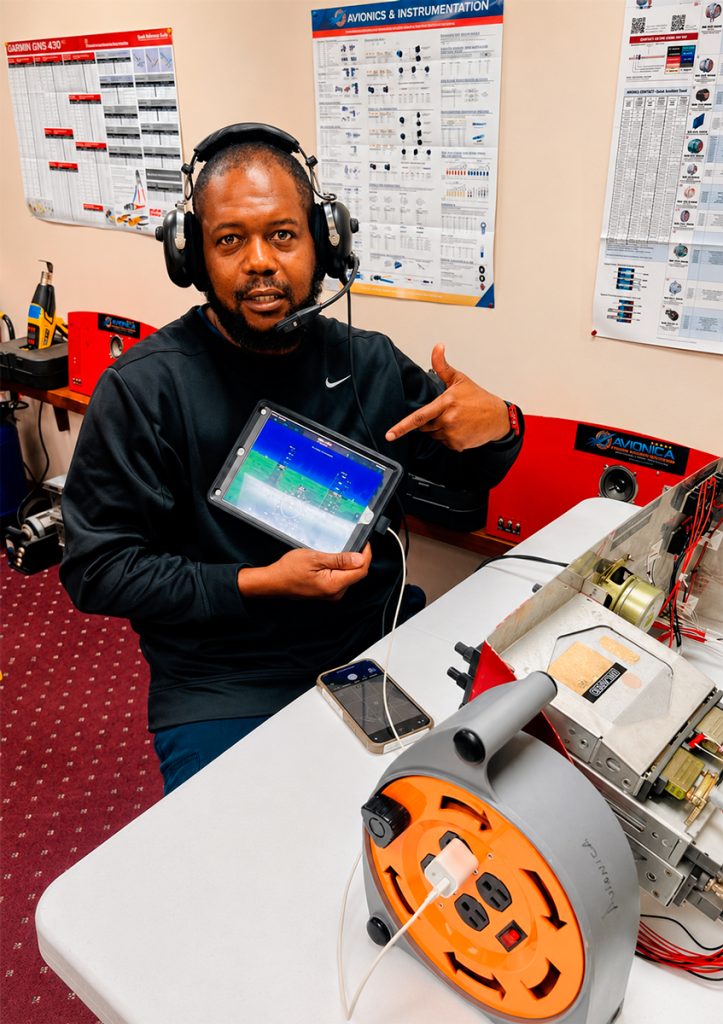
- Connect ADS-B to iPad for live Air Traffic Surveillance
- Disassembly wire harnesses and inventory kits