
Avionics Technician Program
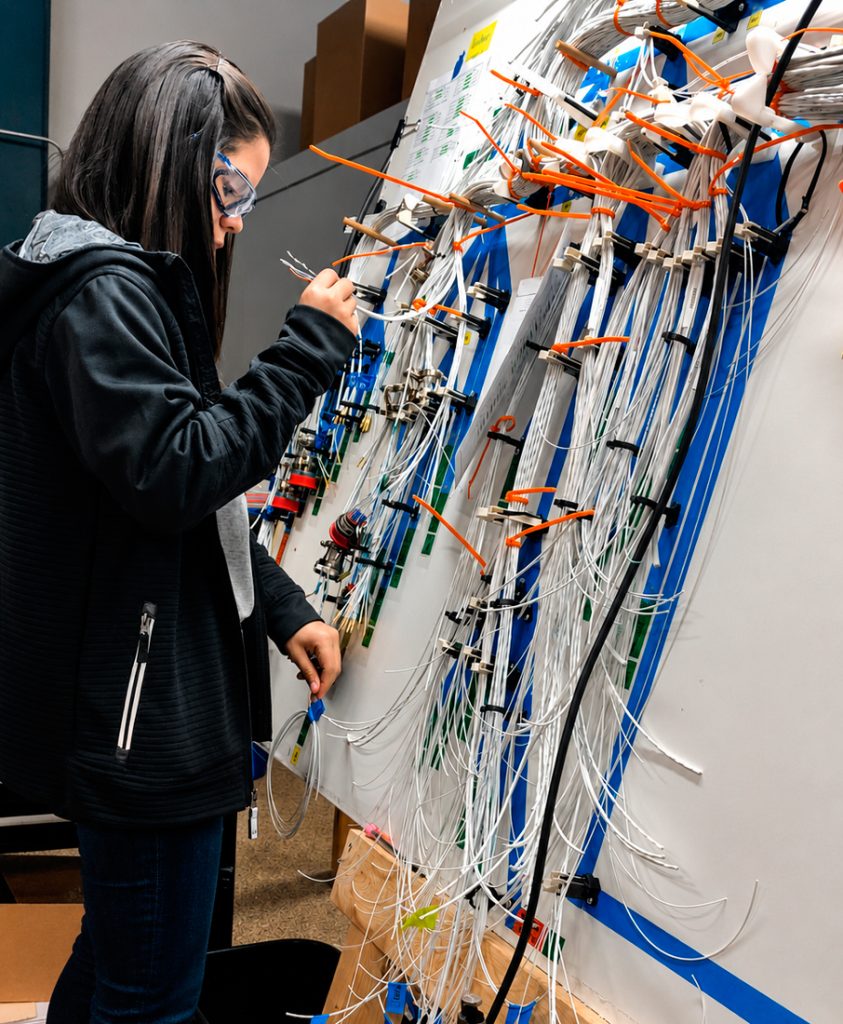
Avionics Technician
Program (ATP)
Launch your career in the aviation industry with our Avionics Technician Program (ATP) a comprehensive three-month, 72-hour hands-on training program designed to prepare students for entry-level avionics careers and industry-recognized certifications.
This program provides practical training in the installation, inspection, troubleshooting, and maintenance of aircraft electronic systems used for navigation, communication, and flight
operations. Students learn using industry-standard tools and equipment while developing the technical skills employers are looking for.
Sign up for
Our mailing list
Program
Schedule

What
You'll Learn
Throughout the program, students gain knowledge and hands-on experience in:
Aircraft electrical and electronic systems
Monday/Wednesday (9am – 12pm):
3 hour session; six (6) hours per week for 12 weeks.
Tuesday/Thursday (9am – 12pm):
3 hour session; six (6) hours per week for 12 weeks.
Navigation and communication equipment
3 hour session; six (6) hours per week for 12 weeks
Tueday/Thursday (6pm – 9pm):
3 hour session; six (6) hours per week for 12 weeks
Avionics installation and troubleshooting
6 hour session; (once) every Saturday for 12 weeks
Aviation safety and regulatory compliance
Monday/Wednesday (9am – 12pm):
3 hour session; six (6) hours per week for 12 weeks.
Tuesday/Thursday (9am – 12pm):
3 hour session; six (6) hours per week for 12 weeks.
Quality control and inspection procedures
3 hour session; six (6) hours per week for 12 weeks
Tueday/Thursday (6pm – 9pm):
3 hour session; six (6) hours per week for 12 weeks
Technical documentation and industry standards
Saturday (9am-4pm):
6 hour session; (once) every Saturday for 12 weeks

Flexible Scheduling
We understand that many students balance work and family commitments. That’s why we offer flexible scheduling options, including weekday, evening, and weekend classes, making it easier to complete your training while maintaining your current responsibilities.

Career Development &
Job Assistance
Your success is our priority. In addition to technical training, we provide career support to help you transition into the workforce, including:
- Professional resume development
- Interview preparation
- Career coaching
- Job placement assistance
- Networking with aviation employers
- Opportunities to participate in On-the-Job Training (OJT) experiences to gain valuable real-world industry exposure and strengthen your resume.
Whether you are beginning a new career or looking to expand your technical skills, the Avionics
Technician Program provides the education, practical experience, and career support needed to
help you achieve your professional goals in aviation.
Week 1
- Introduction Instructor & Students
- Expectations of the course and classroom rules & safety
- Explanation of student package
- Types of airplanes & categories (General Aviation, Corporate Airplanes, Commercial Aviation)
- Parts of the airplane ( Rudder, Flaps, Elevator, Etc.)
- Gyroscopic Instruments (Heading Indicator, Attitude Indicator, Turn Coordinator)
- Vacuum System
- Pitot Static System (Airspeed Indicator, Vertical Sped, Altimeter)
- ADS-B (Automatic Dependent Surveillance-Broadcast)
- VOR (VHF Omnidirectional Range)
- DME (Distance Measuring Equipment)
- NDB & ADF (Non-directional Radio Beacon & Automatic Direction Finder)
- Radios, COMM, Audio Panel, Navigation
- Antennas
Week 2
- GPS (Global Positioning System)
- WAAS (Wide Area Augmentation System)
- Transponders (Mode A, Mode C, Mode S)
- ELT ( Emergency Locator Transmitter)
- ATC (Air Traffic Control)
- EFIS (Electronic Flight Instrument System)
- PFD (Primary Flight Display)
- MFD / ND (Multi-function Display / Navigation Display)
- TCAS (Traffic Collision and Avoidance System)
- Bus Bar (Aircraft Electrical System Components)
- Human Factors
- General Review
- Assessment
Week 3
- Pitot Static Test / System Diagram / System Error / Barfield 1811D Tester
- Terminals & Connectors
- D-Sub
- Molex
- Circular Connectors
- Connector Design & Usage
- Coax Cable
- BNC Connectors
- TNC Connectors
- Quadrax Connectors familiarization
- Basics of building High Speed Network Cable
- Fiber Optics Introduction
- Basics of building High Speed Network Cable
- Applying Fiber Optics in Aviation
Week 4
- Basic Electronics
- Ohm’s Law
- Series & Parallel Circuit
- Resistors Color Codes
- Alternating Current (AC)
- Direct Current (DC)
- Logic Gates (AND, OR, NOR, XOR)
- Diodes
- Capacitors
- Use of multimeter
- Use of Oscilloscope
- Use of function generator
- Use of power supply
Week 5
- Familiarization of Tools (Hand Tools / Crimp Tools)
- Use of Daniels AFM8, AF8 Crimp Tool
- Go-NO-Go Gauge
- Use of HX3 / HX4 Crimp Tool
- Schematic Symbols
- Soldering Techniques
- Wire Splice
- Soldering Jacks
- Wire Tying Knot
Week #7-12
- Inventory of Wire harness kits
- Schematic familiarization (GMA340 / GTR200 / GTX345)
- Assembly Connectors for GMA340 (Audio Panel)
- Assembly Connectors for GTR200 (Radio)
- Assembly Connectors for GTX345 (Transponder)
- Perform harness ring-out (continuity check)
- Install Harnesses to the Radio, Audio Panel, and Transponder
- Connect ADS-B to iPad for live Air Traffic Surveillance
- Disassembly wire harnesses and inventory kits